Declining Sparrows Project

Grassland and open savanna birds are among the most rapidly declining species groups in North America. The Declining Sparrows Project focuses on two species that depend on fire-maintained, open habitats: Bachman’s Sparrow and Henslow’s Sparrow. Both are considered “tipping point” species, having lost more than half of their populations within the last fifty years.

At Nokuse Land Conservancy, long-term habitat restoration and prescribed fire offer a rare opportunity to better understand and reverse these declines.
Download PDF Version Here

Why These Sparrows Matter

Bachman’s and Henslow’s Sparrows are specialists of open pine savannas, grasslands, and early-successional habitats - ecosystems that have been widely lost or degraded due to development, agricultural conversion, and fire suppression.

Because these sparrows are secretive, difficult to observe, and poorly studied, population trends and habitat needs remain poorly understood. Their declines signal broader problems across grassland and savanna ecosystems, making them important indicators of landscape health.

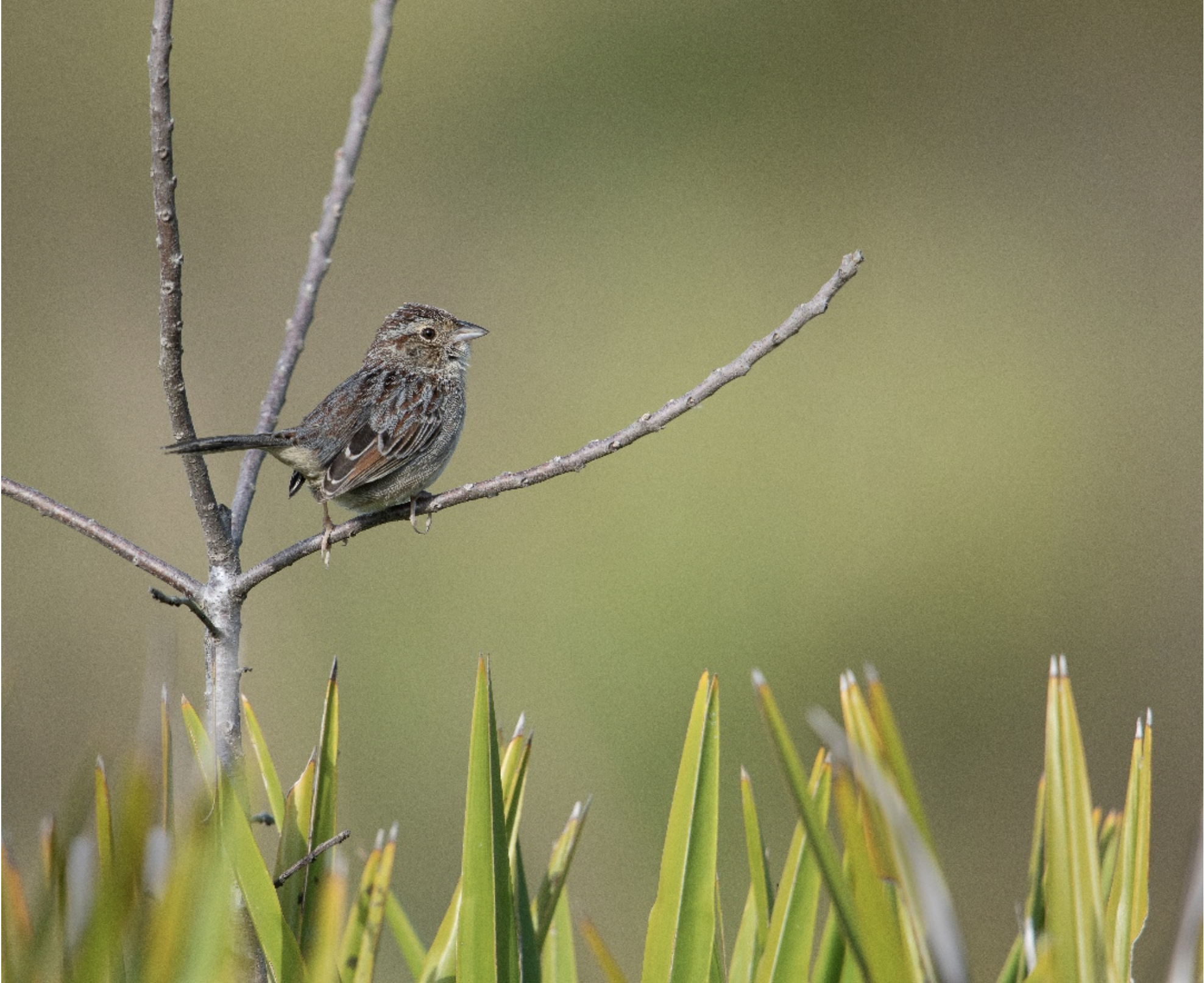
Bachman's Sparrow

Once widespread across the southeastern United States, Bachman’s Sparrow has experienced decades of population decline and has been extirpated from several states where it was formerly common. The species is now classified as a tipping point bird by the North American Bird Conservation Initiative.

At Nokuse, Bachman’s Sparrows breed on site and are present year-round. They rely on open longleaf pine savanna with a diverse grassy understory maintained by frequent fire. For much of the year, these sparrows remain low and hidden in vegetation, making them difficult to detect. They are most visible in early spring, when males perch higher to sing and establish territories.

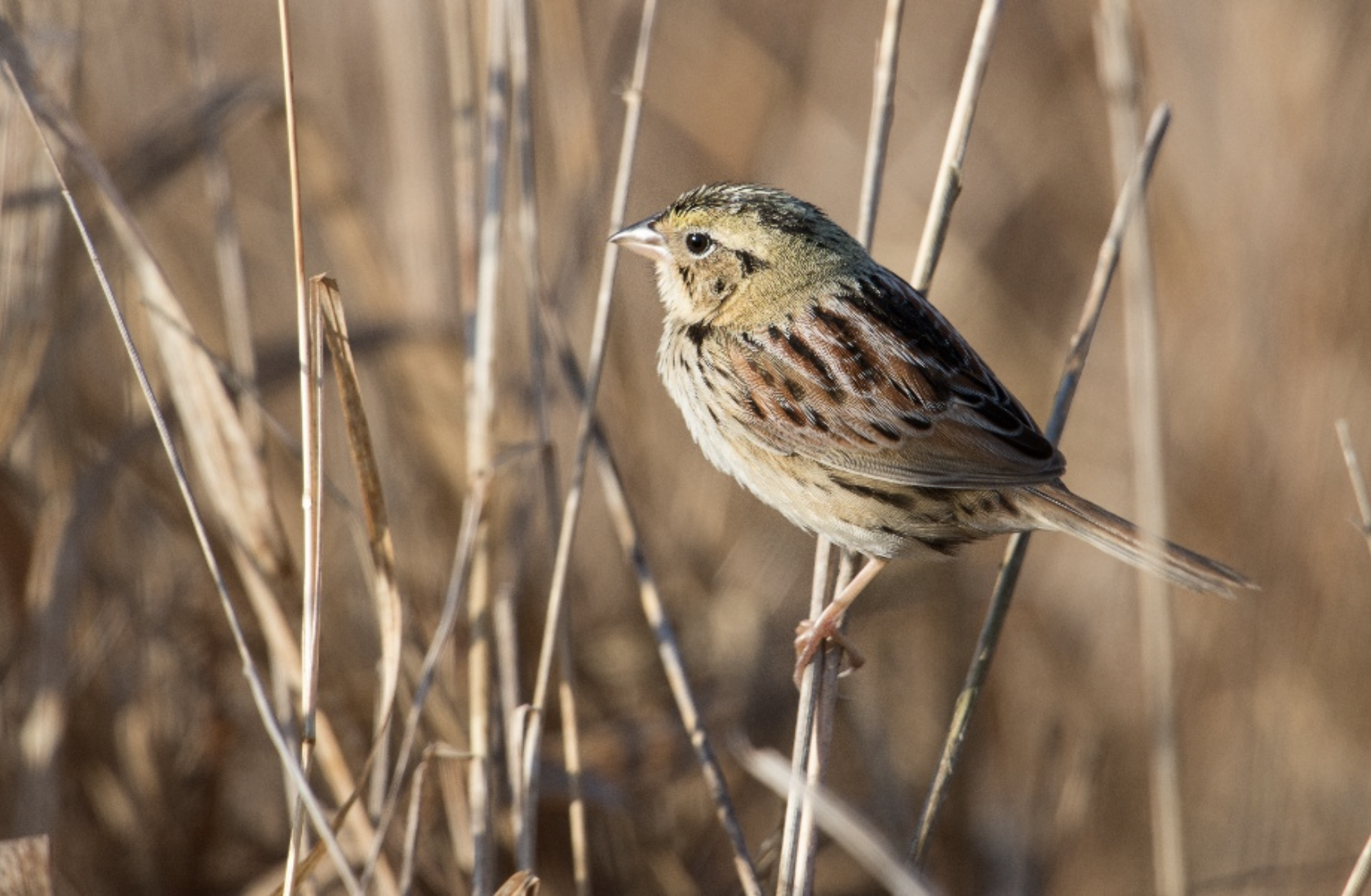
Henslow's Sparrow

Once widespread across the southeastern United States, Bachman’s Sparrow has experienced decades of population decline and has been extirpated from several states where it was formerly common. The species is now classified as a tipping point bird by the North American Bird Conservation Initiative.

At Nokuse, Bachman’s Sparrows breed on site and are present year-round. They rely on open longleaf pine savanna with a diverse grassy understory maintained by frequent fire. For much of the year, these sparrows remain low and hidden in vegetation, making them difficult to detect. They are most visible in early spring, when males perch higher to sing and establish territories.

Research & Monitoring at Nokuse

Due to the limited information available for both species, a new research initiative will begin during the 2025–2026 winter season to better understand how Bachman’s and Henslow’s Sparrows use habitat at Nokuse. This research will help determine how land management practices can be refined to better support these species and guide conservation efforts beyond Nokuse.

Key components of the research include:

The Role of Habitat Restoration & Fire

Both Bachman’s and Henslow’s Sparrows depend on habitats shaped by frequent, low-intensity fire. Prescribed fire helps:

Restored habitat at Nokuse features longleaf pine overstory with a rich, grassy understory - conditions that are increasingly rare across the Southeast and Midwest.

Leadership & Partnerships

The Declining Sparrows Project at Nokuse is coordinated on site by biologist Charli Morgan and led by Dr. Kate Richardson, Director of the Stoddard Bird Lab at Tall Timbers Research Station near Tallahassee, Florida. This work is supported through the expertise and collaboration of partners including Matt Aresco, Biologist and Executive Director at Nokuse; the U.S. Fish and Wildlife Service; the Sentinel Landscapes initiative; and the Sam Shine Foundation, among others.

Looking Ahead

By studying how these rare sparrows respond to restoration and fire, the Declining Sparrows Project will help shape more effective conservation strategies - not only at Nokuse, but across the broader range of these species.

Protecting Bachman’s and Henslow’s Sparrows means protecting the grassland and savanna ecosystems they depend on. In doing so, this work supports countless other plants and animals that rely on the same habitats, and helps preserve a disappearing part of North America’s natural heritage.
author avatar
Vera Orndorff
Shopping Basket