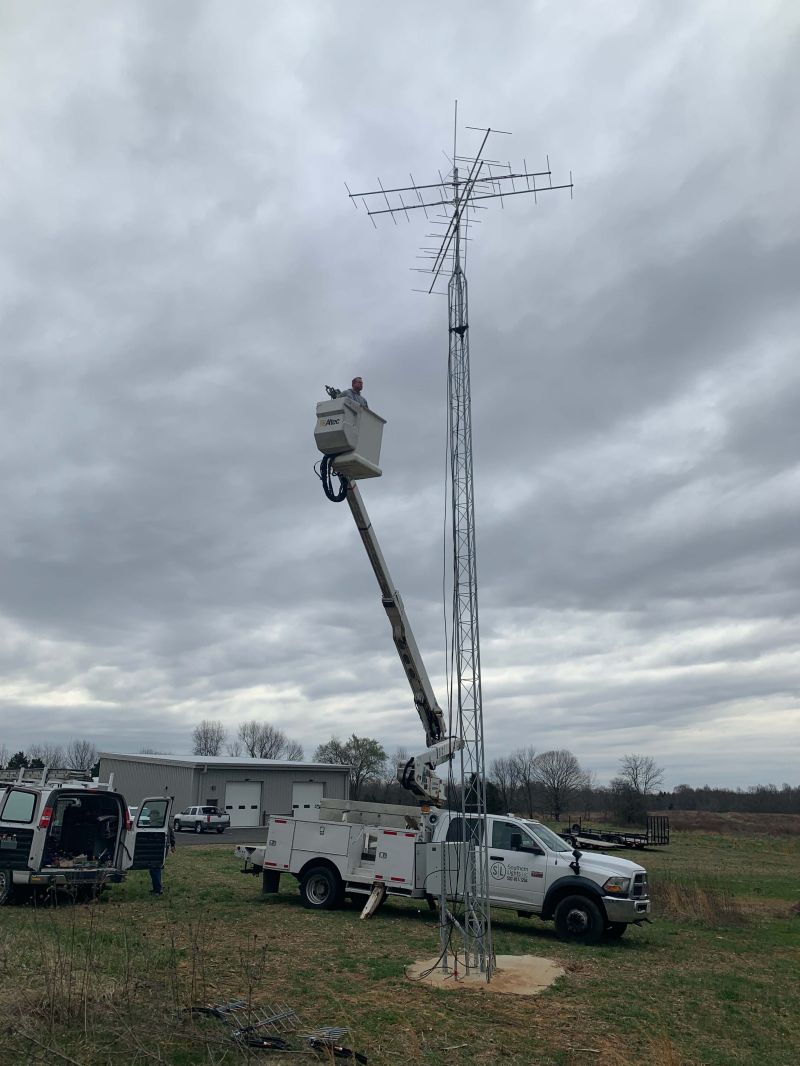
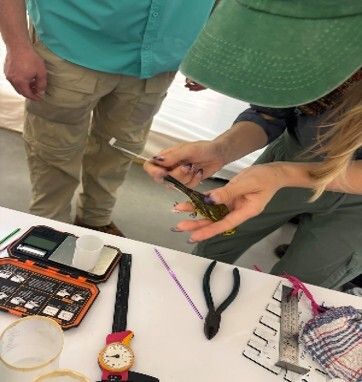
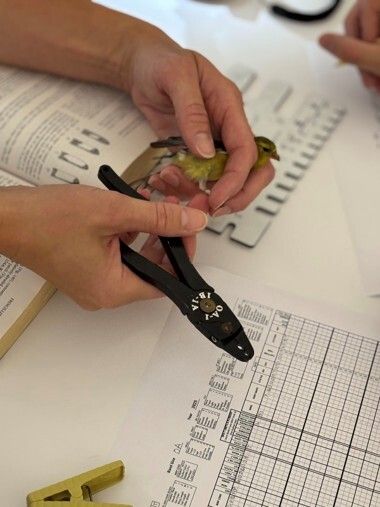
Motus - Latin for movement - is an international research network that uses radio telemetry to track the movement of birds, bats, and insects. Miniaturized tags carried by animals transmit signals to a global network of listening stations, revealing migration routes and movement patterns that were once impossible to study. The Sam Shine Foundation plays a key role in expanding and supporting this network.
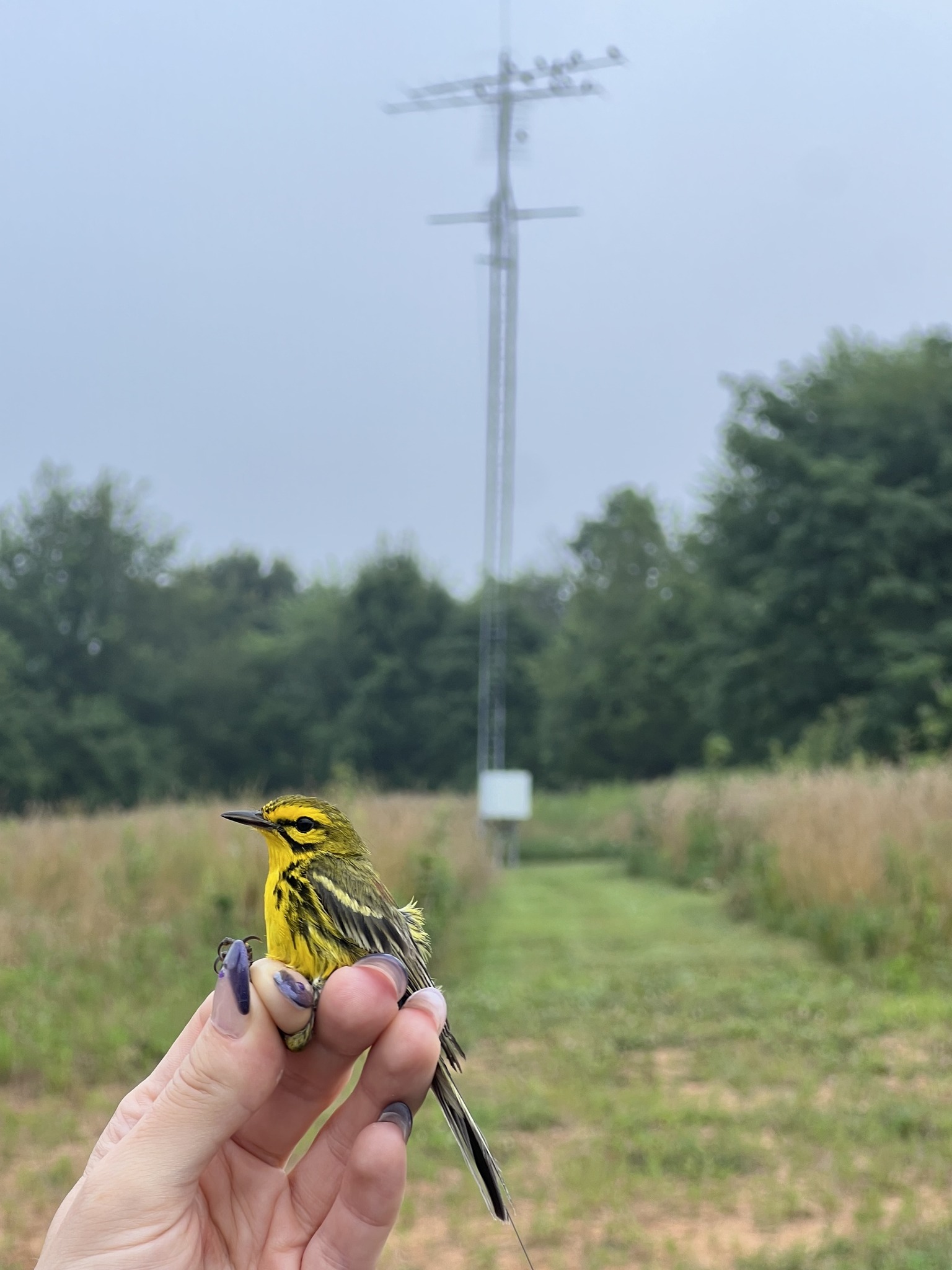
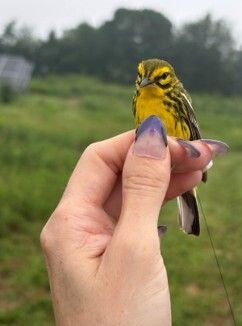
We have an exciting update about one of the birds that we placed a Motus tag on earlier this summer: For the very first time a Prairie Warbler has been tagged in the United States and picked up by a tower in the Motus system!
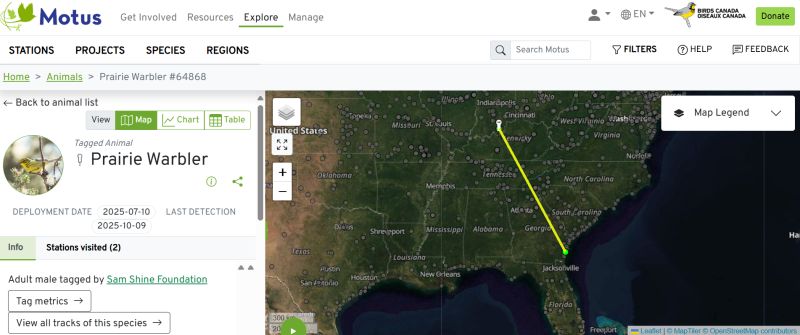
One of the three birds tagged this July on Sam Shine Foundation property sent a signal that was picked up by a tower in southeast Georgia- indicating that the bird (affectionately known as #303) had flown from Indiana to the Georgia coast- a distance of more than 800 kilometers. Overall, the prairie Warbler has lost more than half their population in the last fifty years, so this individual is helping us to learn more about their migration routes and where they spend the winter so that conservation work can be better targeted to help turn around the declines.
This map shows where bird #303 was tagged in southern Indiana, and where the bird was picked up by a Motus tower as it was migrating through southeast Georgia- likely on its way to the Caribbean for the winter months. Future plans are already being made to tag more Prairie Warblers in 2026 and to help fund additional towers to strengthen the Motus network. This connects cutting edge science and technology to more traditional conservation work with a goal of turning around some of the declines that we see in so many bird species across the country.
Animal movement connects ecosystems across vast distances. Migration routes, stopover habitats, and seasonal behaviors are essential to species survival, but are often poorly understood.
Motus provides critical insights that help conservationists:
The Foundation provides guidance and resources to help expand Motus stations across the United States and Central America. Stations supported by our work are currently operating in Indiana, Florida, and Honduras.
We collaborate with organizations, including the Indiana Department of Natural Resources, and research institutions to increase coverage and data collection.
Motus stations supported by the Foundation have detected species such as eastern whip-poor-wills migrating from Canada and wood thrushes traveling from Delaware, demonstrating how connected conservation truly is. By 2030, we aim to significantly expand Motus coverage across Indiana, strengthening regional and global conservation efforts.
We use cookies to improve your experience on our site. By using our site, you consent to cookies.
Manage your cookie preferences below:
Essential cookies enable basic functions and are necessary for the proper function of the website.